‘Indeed Safā and Marwah are among the marks of Allah. So whoever comes to the House for Hajj or performs ‘Umrah, there is no sin for him if he makes rounds between them; whoever comes up with good on his own, then Allah is Appreciating, All-Knowing.’ [Qur’an 2:158]
Safa and Marwah are two small mountains near the Ka’bah. It was these two mountains that Hagar (AS) had ran between in search of water when the baby Isma’il (AS) was crying out of hunger and thirst.
She started with mount Safa, climbed on top to see if she could locate any water or any persons that could assist her, she found nothing and then descended and went to mount Marwah and did the same. She did this seven times before the Angel came and uncovered for her the well of Zam Zam.
There was a section of the valley between the two mountains from where she could not see Isma’il (AS) and she would sprint this section to get to the other side. This is currently demarcated by the green lights that show the area which she ran.
The pilgrims complete the seven circuits of Safa and Marwah and the running between the green lights as part of the ritual of Sa’i when completing the Hajj or Umrah.
There are only two corners of the Ka’bah that are still in the same place as they were from the time of Adam (AS) to Ibrahim (AS) to our Prophet Muhammad (SAW). They are the Black Stone corner and the Yemeni Corner.
Yemeni Corner – Copyright Unknown
The Prophet (SAW) would touch and kiss the Yemeni Corner when passing it during the Tawaf. The Yemeni Corner is on the southern side of the Ka’bah, the last corner before the Black Stone.
Between the Yemeni Corner and the Black Stone Corner the Prophet ( SAW) would make the following Du’a “Rabbana Atina, Fid Dunya Hasanah, wa Fil Akhirati Hasanah, wa Qina ‘Azab Al-Nar” – “Oh Lord, Grant us the Good of this World, and the Good of the Next World, and Save us from the Punishment of the Fire”.
The Bible makes a reference of the miracle of Zamzam when it talks about the passing through of Ismail (upon him be peace) and his mother through the valley: “Blessed is the man whose strength is in Thee; in whose heart are the ways of them who passing through the valley of Bacca make it a well.” [Psalm 84:5-6. Note that the Quran also refers to Makkah as Bakkah]*
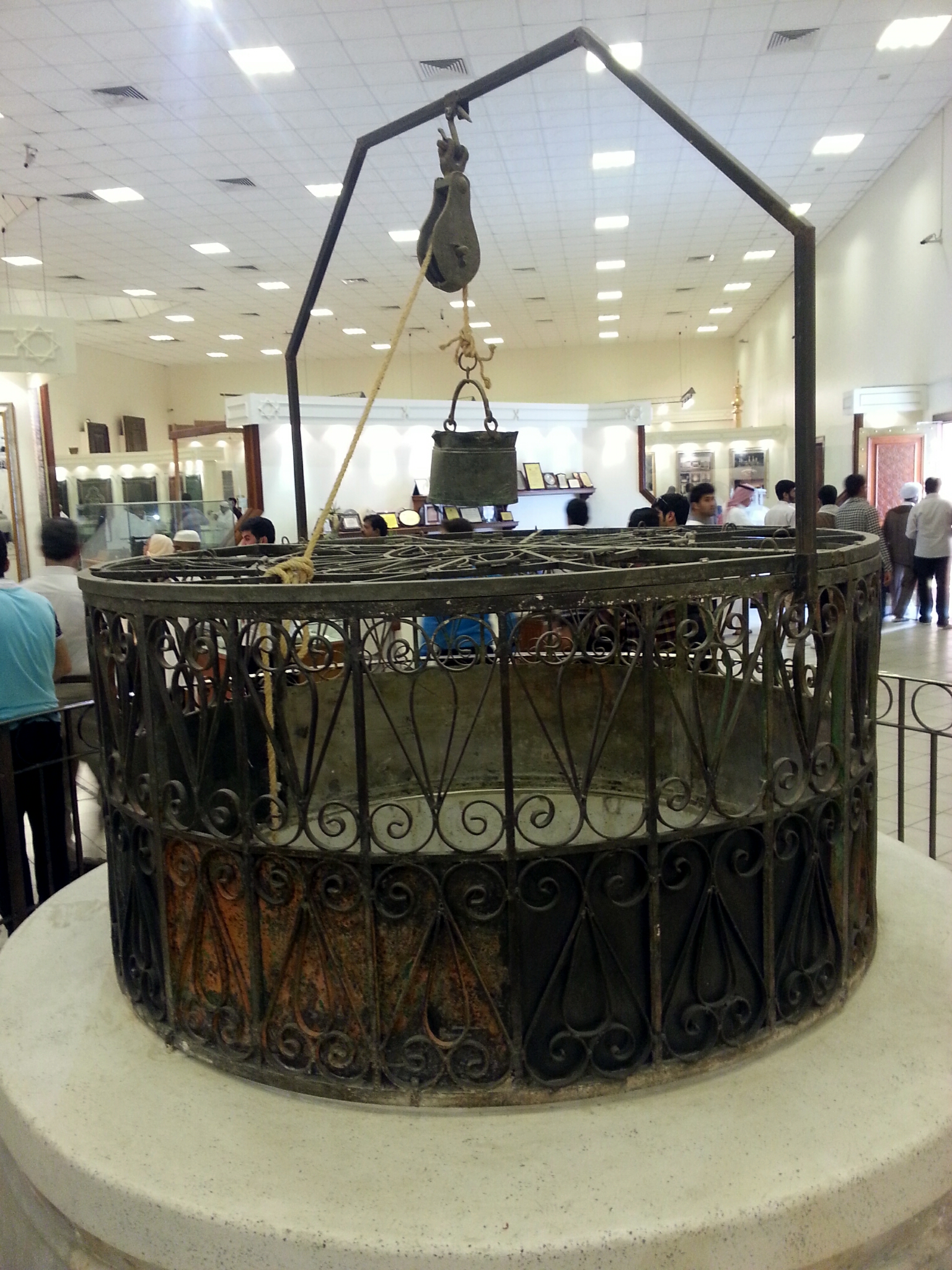
Old Zam Zam Well at the Museum in Makkah – Photo Copyright Islamopedia
The well of Zam Zam is no longer accessible to the pilgrims. It used to be situated between the Maqam of Ibrahim and the beginning of Mount Safa.
The well of Zam Zam was discovered by the babe Isma’il (AS) and his mother Hagar (AS) whilst she was running between Mount Safa and Marwa looking for water as he, Isma’il (AS), was crying out of hunger and thirst.
They were left there by Prophet Ibrahim (AS) on the command of Allah (SWT). After Hagar (AS) ran seven circuits of Safa and Marwa an Angel appeared by the place where Zam Zam was and started to dig until water appeared. Hagar (AS) continued digging around the well and took the water that she needed for herself and Isma’il (AS).
Due to this new source of water, peoples and tribes started to settle around Isma’il (AS) and Hagar (AS) and around the Zam Zam well. This formed the early Makkan community.
Zam Zam stayed with the tribes of Makkah until it was buried by the tribe of Jurhum upon their expulsion from Makkah. Several hundred years later, the well was rediscovered by ‘Abdul Muttalib, the Prophet’s grandfather, through a series of dreams in which he was directed to dig back up the well of Zam Zam.
It has been with us since then and continues to quench the thirst of millions of pilgrims every year that attend the Minor (Umrah) and Major (Hajj) Pilgrimage.
‘When We made the House (Ka‘bah of Makkah) a frequented place for men, and a place of peace! Make from the Station of Ibrāhīm a place of prayer. We gave the (following directive) to Ibrāhīm and Ismā‘īl (Ishmael): “Purify My House for those who are to circumambulate (make Tawāf) and those who stay in I‘tikāf, and those who bow down or prostrate themselves (in prayers).’ [Qur’an 2:125]
Maqam Ibrahim (AS) – Copyright Islamopedia
The Maqam of Ibrahim (AS) is the stone on which the Prophet Ibrahim (AS) stood when building the Ka’bah. He stood on it and worked his way around the Ka’bah whilst Isma’il (AS) passed him the stones for the walls of the Ka’bah.
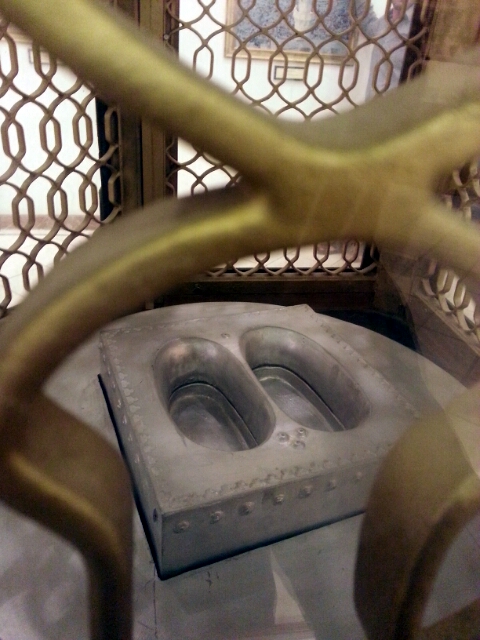
Copy of Ibrahim’s Footprint from the Museum in Makkah – Copyright Islamopedia
Out of deference to Ibrahim (AS) and the task that he was undertaking, the stone became soft for him and Ibrahim’s (AS) footprint was engraved on the stone.
The stone now sits in a golden enclosure a couple of meters away from the Ka’bah. Pilgrims are required to pray behind the Maqam of Ibrahim once they have completed the Tawaf (Circumambulation) of the Ka’bah.
Al Hijr Isma’il (AS) – Sometimes Also Known as Hateem
Aisha (RA) narrated: “I wanted to enter the House (i.e. Ka’bah) and pray inside. Allah’s Messenger (SAW) took my by the hand and led me inside the Hijr and said: ‘If you want to go inside the House then pray here, for it is part of the House, but your people reduced its area when they rebuilt it.'” [Al-Nasa’i]
Al Hijr – Copyright Unknown
This area is the semi circular area outside of the Ka’bah located under the Mizab (the Golden Gutter of the Ka’bah). It forms part of the Ka’bah, however, was excluded from the Ka’bah when the Quraish rebuilt the Ka’bah during the time of the Prophet (SAW).
This was because they had run out of sufficient acceptable funds from good sourced to be able to complete the full building. Therefore they built as much as they were able to with the funds available and built a semi circular wall to surround the part that they had missed.
Hijr Isma’il Aka Hateem – Copyright AdminPak
If one prays in this area it is as if you have prayed inside the Ka’bah itself.
It’s a Mercy from Allah that the Hijr was not included in the building because it now means that ordinary pilgrims such as ourselves can pray inside the Ka’bah by praying inside of the Hijr.
May Allah grant everyone Tawfiq to be able to pray in the Hijr Isma’il.
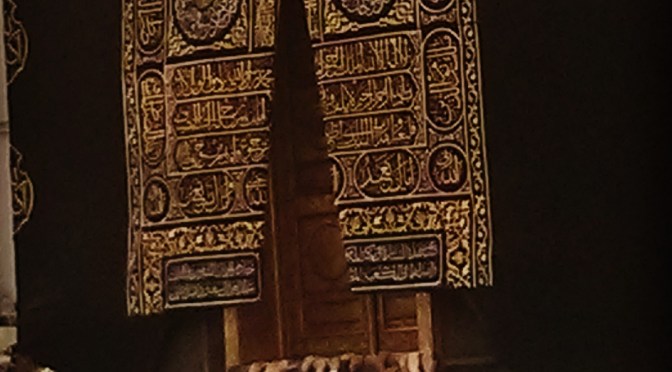
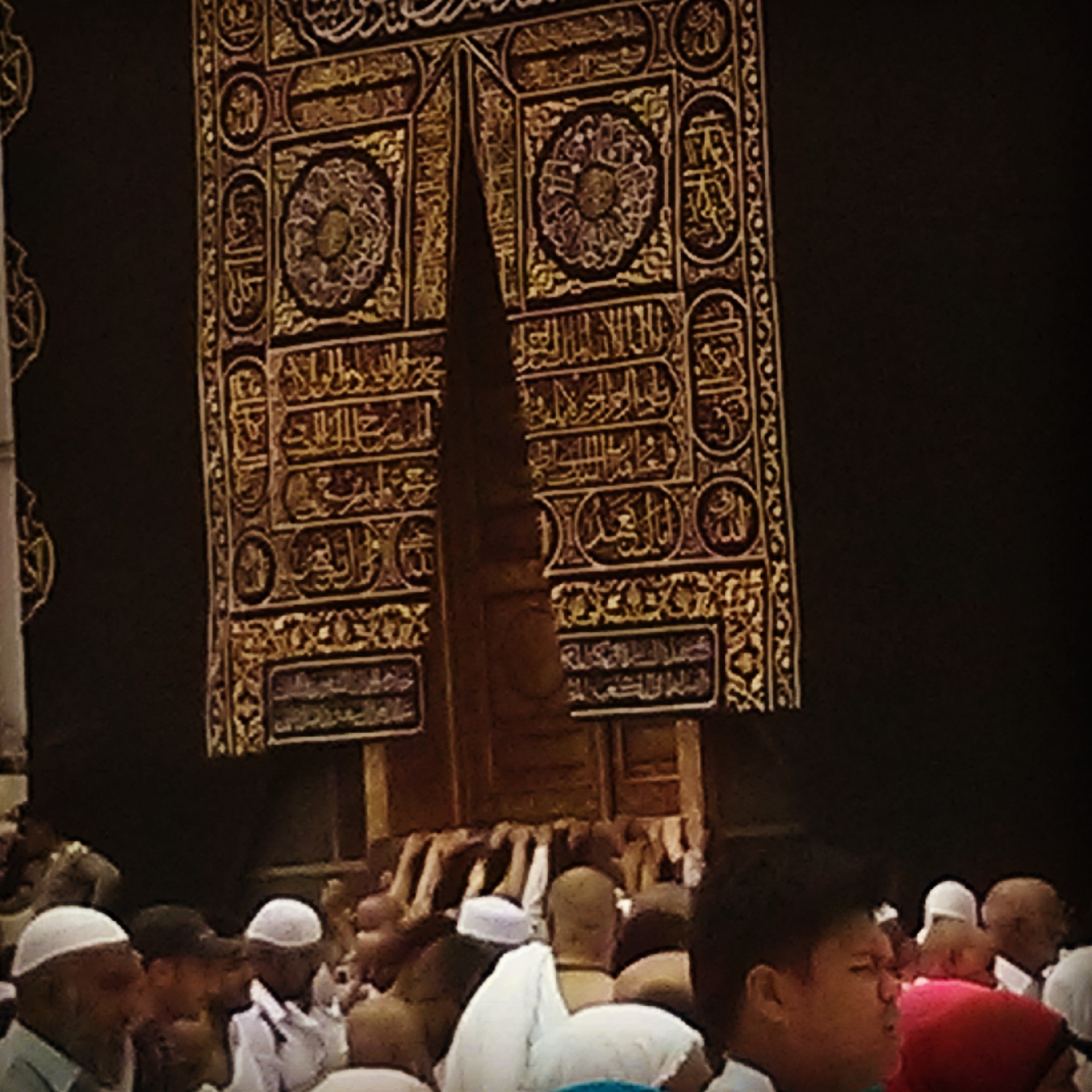
The Multazam is the area between the Black Stone and the Door of the Ka’bah and is another area of the Ka’bah where Dua is accepted.
Multazam – Photo Copyright Islamopedia
The Prophet (SAW) made Dua in this area after the conquest of Makkah. The companions also made Du’a in this area clinging onto the Ka’bah and in some cases rubbing their bodies / faces against it.
The Messenger of Allah (peace and blessings of Allah be upon him) said: “The Black Stone came down from Paradise and it was whiter than milk, but the sins of the sons of Adam turned it black.” [Narrated by al-Tirmidhi]
The Black Stone – Copyright Unknown
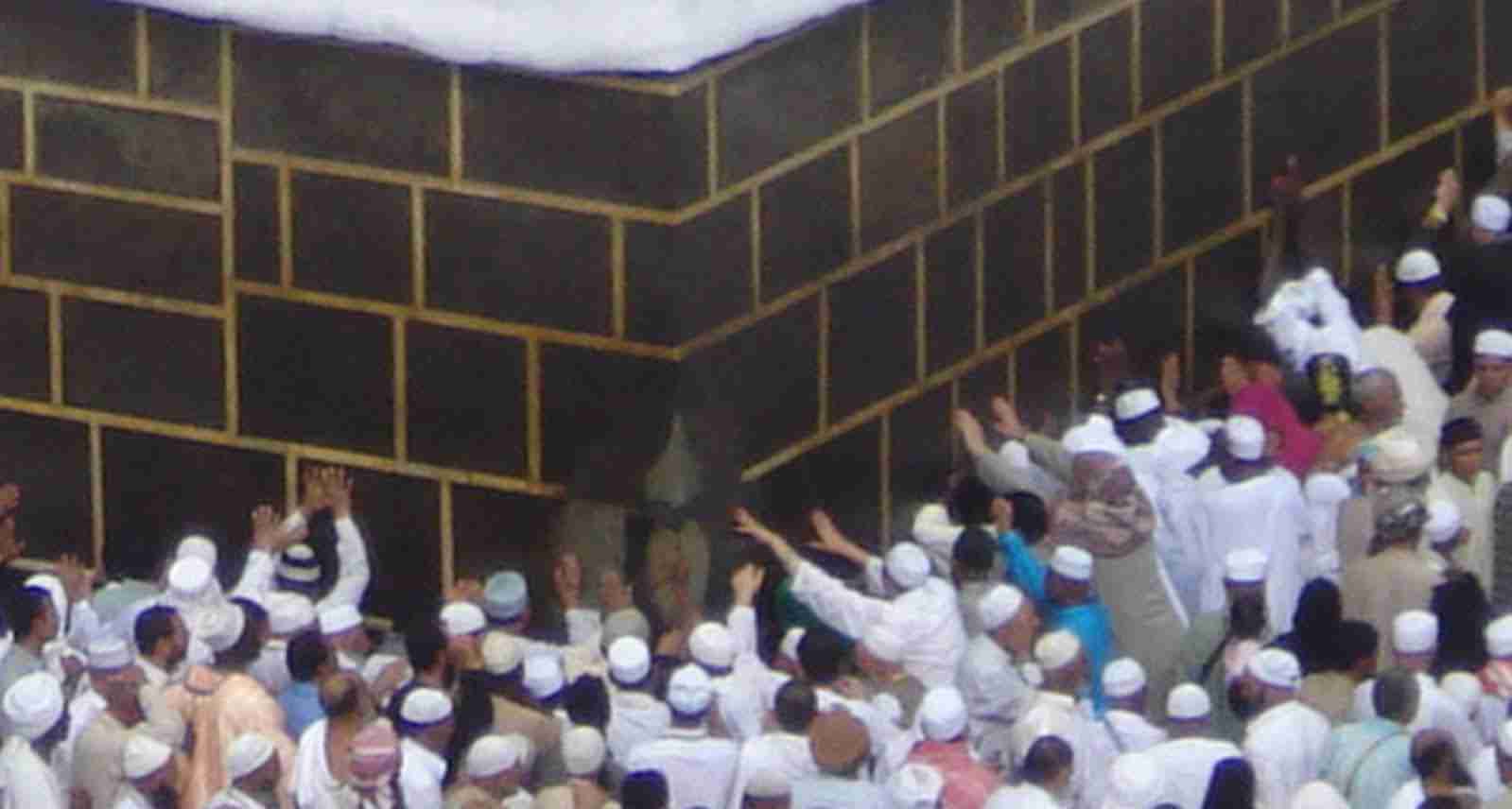
The Black Stone is set in the one of the Southern corners of the Ka’bah. It is a blessed stone from one of the stones of Paradise. The Prophet (SAW) touched it and kissed it when starting each round of Tawaf (circumambulation) of the House and therefore we are also commanded to touch it and kiss it if possible.
Due to the large number of pilgrims, in most cases, it is almost impossible to touch and kiss the Black Stone unless you push and shove your way through. It is sufficient to just raise your hands to it, kiss the hands and start the Tawaf by saying Bismillah Allahu Akbar.
When the Black Stone came down from Paradise it was a white as milk, but it soon turned black due to the sins of Mankind.
It is currently in a silver casing because it was stolen by a heretical group called the Qarmatians in the middle ages and was broken to pieces before being recovered by the Caliph. The silver casing is there to hold all the broken pieces together.
The Black Stone will come with eyes and a tounge on the day of Judgement and will intercede to Allah on behalf of everyone that touched it and kissed it.
‘God has appointed the Ka’bah, the Sacred House as an [enduring] institution for mankind, and the sacred month, the offering and the garlands; that is so that you may know that God knows all that is in the heavens and in the earth, and that God has knowledge of all things.’ [Qur’an 5:97]
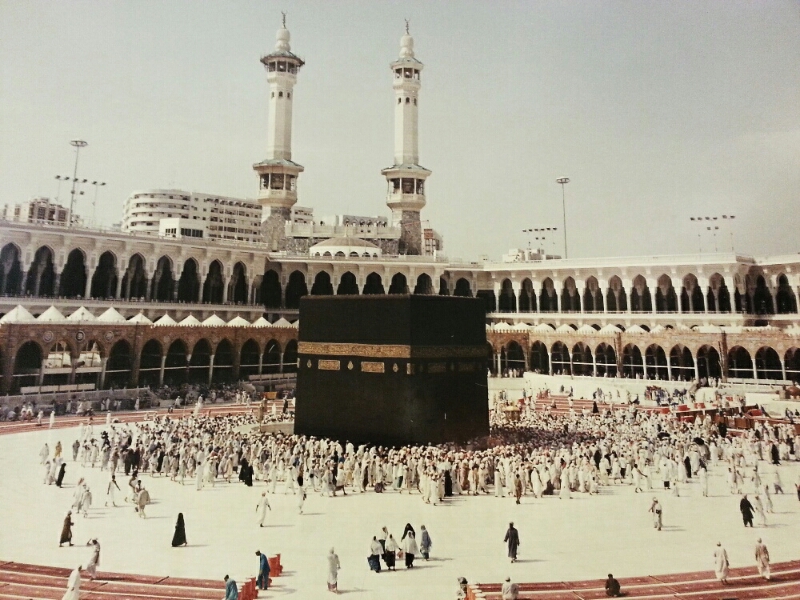
Ka’bah – Photo Copyright Islamopedia
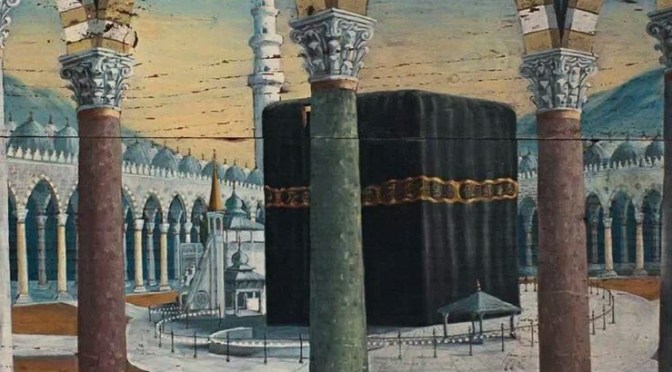
The Ka’bah is the Sacred House of Allah. It was the first House to be built for the worship of Allah and continues to be the direction of prayer for the Muslims until the day of Judgement.
It was first built by the Angels before the advent of Man. Then it was built by Adam (AS). The Ka’bah was lost for a period of time after Adam (AS) until it was re-built again by Prophet Ibrahim (AS) and Prophet Isma’il (AS).
Old Sketch of the Ka’bah – Copyright Unknown
It has been with Mankind since the time of Ibrahim (AS) and will continue to be here until the end of time.
It’s a beautiful sight to see how thousands upon thousands of people circle the House every day and to know that despite our own heedlessness there will always be people worshipping Allah by His House in the Haram.
Millions of Muslims visit the Ka’bah every year as part of the minor (Umrah) and Major (Hajj) pilgrimage.
‘Lo! the first Sanctuary appointed for mankind was that at Becca, a blessed place, a guidance to the peoples;’ [Qur’an 3:96]
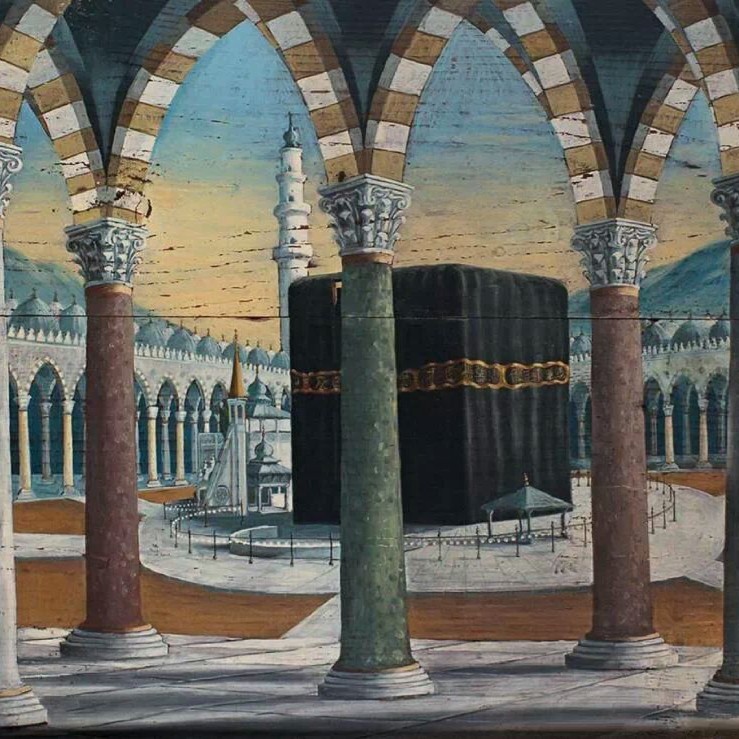
Photo of Masjid Al Haram from the Museum in Makkah – Image Copyright of Islamopedia
Masjid Al Haram is the famous Mosque in Makkah that has within it the Ka’bah, the Blackstone, the Multazam, the Hijr Isma’il, the Maqam of Ibrahim, the well of Zam Zam, and the Mountains of Safa and Marwa.
One prayer prayed in Masjid Al Haram is equal to praying a hundred thousand prayers in other Masjids.
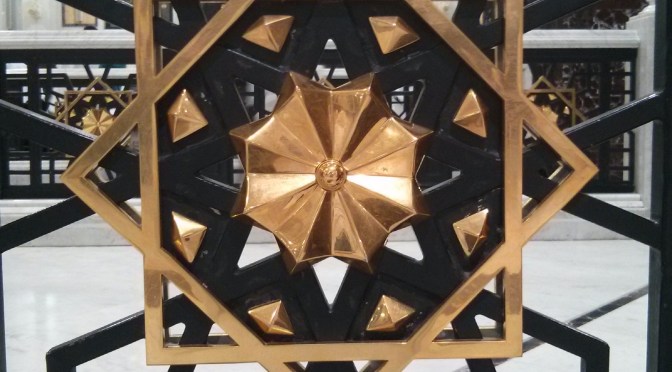
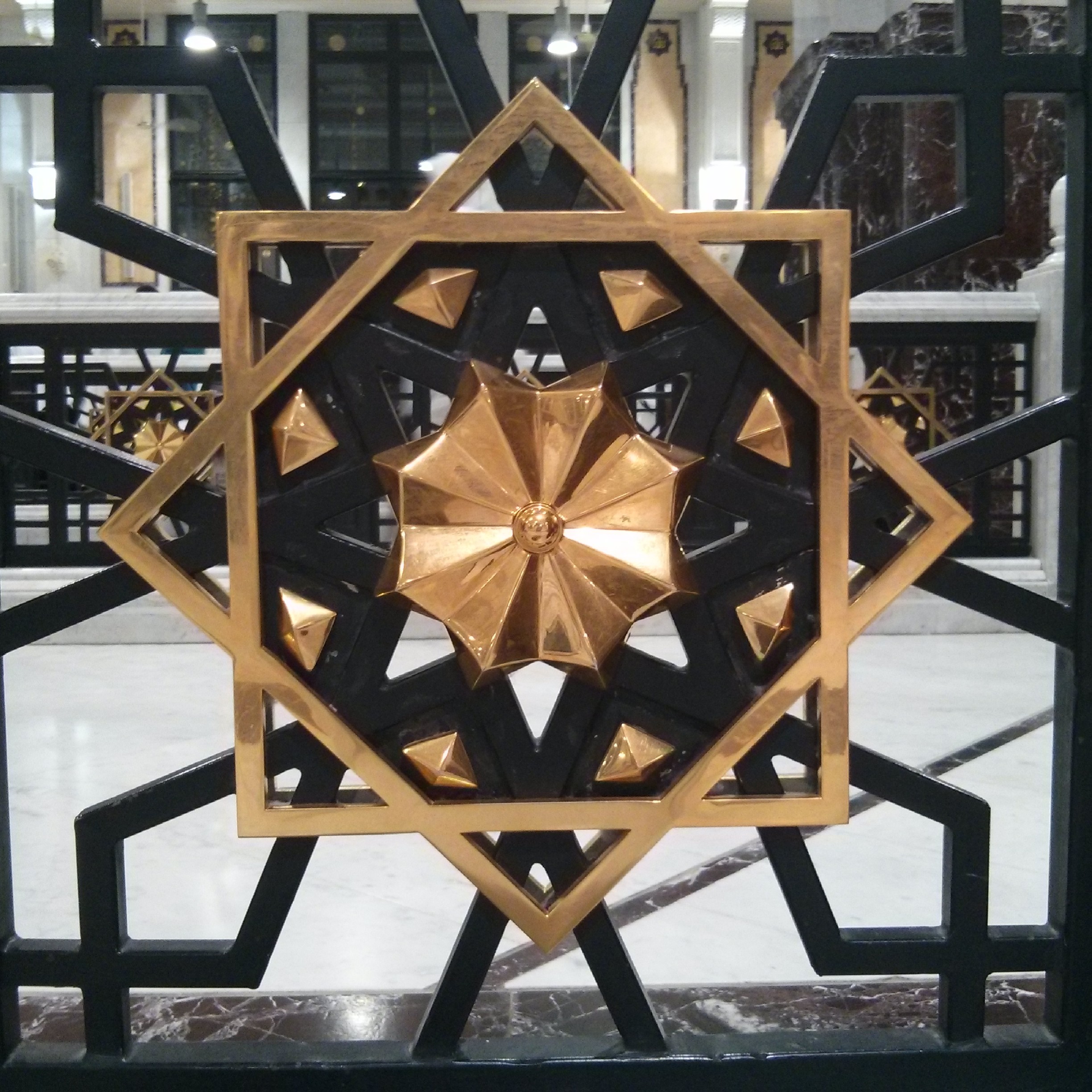
Decorative Grill in Masjid Al Haram – Image Copyright of Islamopedia
Millions of pilgrims visit Masjid Al Haram every year in order to fulfill the age old tradition of Hajj and Umrah as established by Prophet Ibrahim (AS) and Isma’il (AS) and continued by our Prophet and Master Muhammad (SAW).
For the places where Du’a is accepted in the Haram, see AlMiskeenah’s post below:










 Abu Zaynah